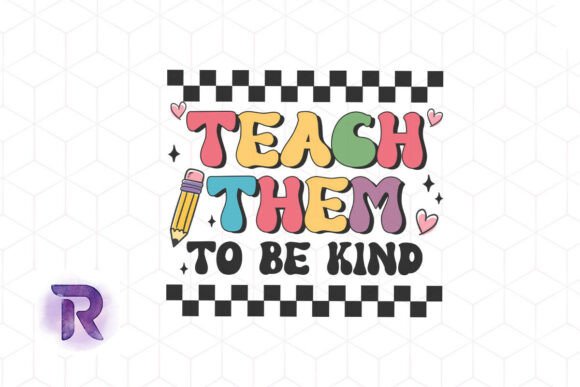
A Kindness Design Built for Real Projects
Whenever I'm looking at a new embroidery design for professional use, I don't just judge it as a picture on a screen. I imagine it stitched out. I think about the fabric it will sit on, the hands it will pass through, and the mood it will create in a finished product. That’s my first step with Teach Them to Be Kind Back School PNG. The impression is immediately warm and purposeful. It’s not overly fussy or decorative; its strength is in its clear, heartfelt message and balanced layout. This isn't a flashy, detailed illustration—it's a statement piece, and that visual personality tells me it belongs on projects where the sentiment is the star.
The Natural Home for This Embroidery Design
Let me paint a real scenario. I’m preparing a custom order for a teacher’s gift—an embroidered canvas tote bag. The client wants something meaningful, durable, and usable. As I scroll through my machine embroidery design library, this one stands out. The theme is perfect: it speaks directly to the core of education with a gentle, timeless appeal. The layout, with its central, clear lettering, feels stable and easy to place. I can instantly visualize it on the front of that tote, or centered on the back of a cozy sweatshirt for a school volunteer. It has that versatile, graphic quality that belongs on custom apparel, aprons, or a simple pillow cover in a classroom.
Its charm lies in its simplicity. For a boutique owner creating small shop products, or an Etsy seller specializing in personalized gifts, this design is a ready-made asset. It doesn’t require the customer to “get” a complex visual joke; the message is direct and universally appreciated. That builds customer trust and makes the handmade product feel thoughtful and intentional.
Where the Stitching Shines and Where to Tread Carefully
In real-life embroidery projects, performance is key. For most applications—think tote bag design, standard sweatshirts, kitchen towels, or linen—this design should stitch out beautifully. The likely use of bold satin stitch for the letters and simpler outlines means good stitching clarity and solid coverage. On light-colored, stable fabrics, it will become a crisp, valued feature.
However, a professional always thinks about limitations. The true test comes on more challenging surfaces. If you’re considering a baby embroidery item on a stretchy knit, or putting it on a curved surface like a cap, you need to plan. Smaller details, like the potential dots or decorative accents, might need careful hoop size and stabilizer selection to prevent puckering. Working on dark fabric requires thoughtful thread color contrast—a bright white or pastel fill stitch might be essential to keep the message legible and vibrant.
Also, consider scale. If you reduce it drastically for a tiny patch or a small corner on a baby clothes item, the lettering’s stitch density could become too dense, making the fabric stiff. Conversely, enlarging it for a blanket or large decorative pillow should work well, amplifying its gentle statement.
Turning a Digital File into a Professional Product
The leap from a digital embroidery file to a sellable, giftable item is where your skill meets the design’s potential. Teach Them to Be Kind Back School PNG offers a strong foundation. Its clear theme boosts the product value of something like a holiday gift for a teacher or a welcome gift for a new educator. It feels professional and consistent, which aids in brand consistency for a crafter focused on school-related merchandise.
For commercial embroidery, such as producing a line of embroidered patches or apparel for a local school fundraiser, this design has high recognition and giftability. It engages buyers because it resonates emotionally. However, this is where my practical notes must come in.
Essential Designer Checks Before You Hoop
First, always test the design on scrap fabric first. Use the same material you intend for the final product—a piece of canvas for a tote, or a swatch of that sweatshirt fleece. This reveals everything: how the fabric texture interacts with the stitches, whether any small areas jump or pull, and if the overall size feels right.
Check thread color contrast against your background. Run a test it in black and white mockups mentally, or in your software, to ensure the design holds its form without color. Compare light and dark fabric backgrounds in your plan. A design like this might need a completely different thread palette for a dark navy hoodie versus a light oatmeal linen.
Finally, and crucially for any craft business or digital product seller, confirm licensing before selling finished items. The product description mentions versatility for decor and printables, but as a reviewer, I must advise you to verify the specific terms. Does the license allow for physical finished product sales? Does it cover commercial embroidery projects? Never assume. This step protects your business and your customer relationships.
A Design That Embodies Its Message
In the end, Teach Them to Be Kind Back School PNG succeeds because it embodies the practicality and warmth it advocates. It’s a design that doesn’t overcomplicate its purpose. For the embroidery designer, the small business owner, and the maker creating a heartfelt gift, it provides a reliable, attractive vehicle for a powerful message. When stitched out with care on the right project, it transforms from a graphics file into a tangible reminder of kindness—and that’s the best kind of crafts project outcome you can hope for.